
Stablecoins Are Changing Global Payments and Financial Services
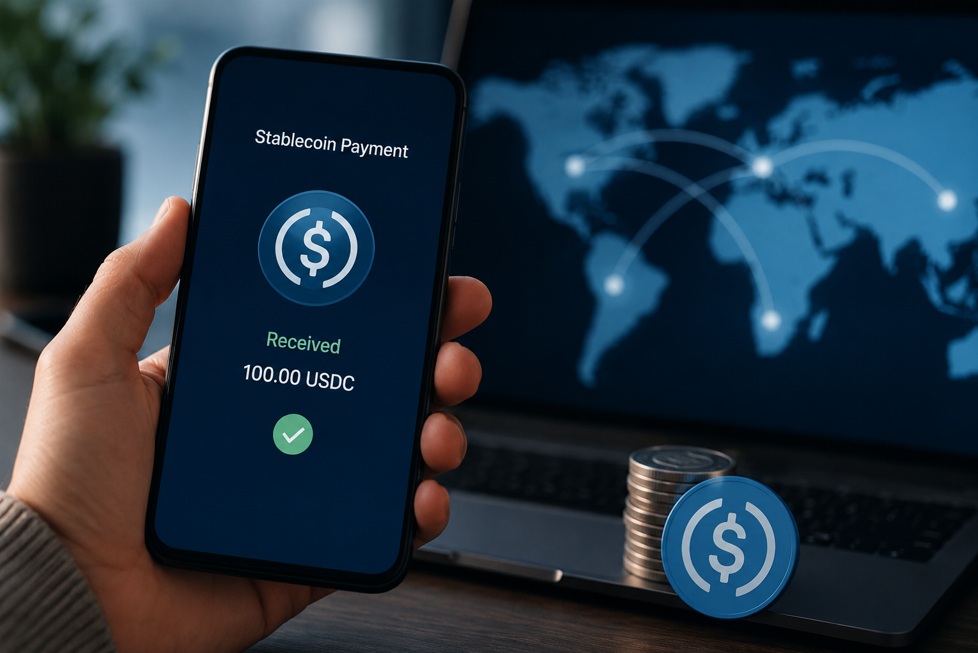
NEW YORK, NY / CorporatePRwire / August 20, 2026 / Stablecoins are moving into a more practical role in the financial system as companies, banks, payment providers, and consumers explore new ways to send and receive money. Unlike highly volatile cryptocurrencies, stablecoins are designed to maintain a relatively steady value, with many tied to currencies such as the U.S. dollar.
That stability has made them one of the most closely watched areas of the digital asset market. What began largely as a tool for trading within cryptocurrency markets is now being explored for payments, international transfers, remittances, and financial settlement.
The technology is still developing, but its potential impact on the way money moves across borders is attracting attention from both the private sector and regulators.
What Are Stablecoins?
Stablecoins are digital tokens that operate on blockchain networks and are designed to maintain a stable value. Many are linked to fiat currencies, particularly the U.S. dollar.
The way stablecoins maintain their value depends on the individual project. Some issuers hold reserves such as cash or short-term government securities, while other models use different forms of collateral or mechanisms to support the token’s price.
For businesses, the main attraction is relatively simple: stablecoins combine the digital transfer capabilities of blockchain networks with a value that is intended to be less volatile than traditional cryptocurrencies.
A New Option for Cross-Border Payments
Moving money between countries can be complicated. International payments may pass through several financial institutions and can involve currency conversions, processing delays, and transaction fees.
Stablecoins offer another approach. A digital token can be transferred between compatible wallets without necessarily following the same path as a conventional international bank payment.
For companies working with overseas suppliers, freelancers, contractors, or customers, this could provide another way to manage certain international transactions.
The benefits, however, depend on the blockchain network, the payment provider, local regulations, and the cost of converting stablecoins into traditional currencies. Stablecoins are not automatically faster or less expensive in every market.
Why Businesses Are Paying Attention
Companies are increasingly looking at digital payment systems as part of broader efforts to improve financial operations.
Stablecoins may have applications in areas such as international supplier payments, treasury management, digital commerce, and transfers between financial platforms.
For example, a company with operations in several countries could use a dollar-linked stablecoin for certain transactions and convert it into local currency when necessary. This can create an additional payment option alongside traditional bank transfers and payment services.
The technology may be particularly useful for businesses that regularly deal with international transactions and need greater flexibility in moving funds.
Financial Institutions Explore Blockchain Payments
Banks and other financial institutions are also studying how blockchain technology can fit into existing financial infrastructure.
Stablecoins could be used for settlement between financial institutions, international transfers, and other transactions where speed and digital connectivity are important.
One feature that attracts attention is the ability of blockchain networks to operate continuously. Traditional financial systems often depend on banking hours and established settlement schedules, while blockchain networks can process transactions outside those traditional windows.
That does not mean blockchain will replace the banking system. A more likely development is a combination of traditional financial services and blockchain-based infrastructure.
Stablecoins and Remittances
Remittances are another area where stablecoins could have an impact.
People around the world regularly send money to relatives and communities in other countries. Traditional remittance services can involve fees, currency conversion costs, and waiting periods.
Stablecoins provide a digital alternative for moving value across borders. In a typical transaction, a sender could purchase a stablecoin, transfer it to another wallet, and the recipient could convert it into local currency through an available exchange or payment service.
There are still practical barriers. Recipients need access to digital wallets and conversion services, while local regulations can determine whether and how stablecoins may be used.
Regulation Will Shape the Market
As stablecoins become more widely used, regulators are paying closer attention to the sector.
Questions surrounding reserves, consumer protection, financial stability, anti-money-laundering requirements, and transparency remain central to the regulatory discussion.
Clear rules could help businesses and financial institutions understand how stablecoins can be used legally and responsibly. At the same time, compliance requirements may increase costs for issuers and companies that build payment services around digital assets.
The regulatory environment will likely differ from one country to another, making international operations an important challenge for companies entering the market.
Risks Remain
Stablecoins are not risk-free.
A key concern is whether an issuer has sufficient reserves or other mechanisms to support the value of its tokens. Users and businesses need confidence that they can redeem or exchange their holdings when necessary.
Security is another consideration. Blockchain networks, digital wallets, exchanges, and smart contracts can be targeted by hackers. Businesses using stablecoins therefore need appropriate security measures and internal controls.
There is also the issue of liquidity. A stablecoin may be easy to transfer, but users still need access to reliable markets or payment providers when converting it into local currency.
These factors mean businesses should evaluate stablecoins based on their specific needs rather than assuming that the technology will solve every payment challenge.
Connecting Traditional Finance With Digital Assets
Stablecoins occupy an unusual position in the financial world because they sit between traditional money and digital assets.
Many stablecoins are linked to established currencies rather than attempting to create an entirely new unit of value. At the same time, they use blockchain networks to transfer that value digitally.
This combination could help explain why stablecoins are attracting interest beyond the cryptocurrency industry. Their potential applications extend into payments, financial settlement, e-commerce, and other areas where companies need to move money efficiently.
The broader development of tokenized assets and blockchain-based financial infrastructure could further increase their role.
What Comes Next?
The future of stablecoins will depend on several factors, including regulation, technology, market adoption, security, and consumer confidence.
If the industry develops with appropriate safeguards, stablecoins could become a useful part of the global payments system. They may not replace banks, traditional currencies, or established payment networks, but they could provide another way to transfer and settle funds.
For businesses, the most important question may not be whether stablecoins will replace existing payment systems. Instead, it may be how digital assets can work alongside traditional financial services to make selected transactions more efficient.
As blockchain technology continues to mature, stablecoins are likely to remain an important part of the conversation about the future of global payments and financial services.